
Our approach
A deployment method built around the people who run the work: begin with the process, keep responsibility at decision points, evaluate on real cases, and hand over.
Five operating principles
Begin with the work
An implementation begins with a business process and the people responsible for it. We identify sources, decisions, hand-offs and exceptions before choosing an agent workflow, so the project serves an operational need rather than a demonstration.
Deploy engineers forward
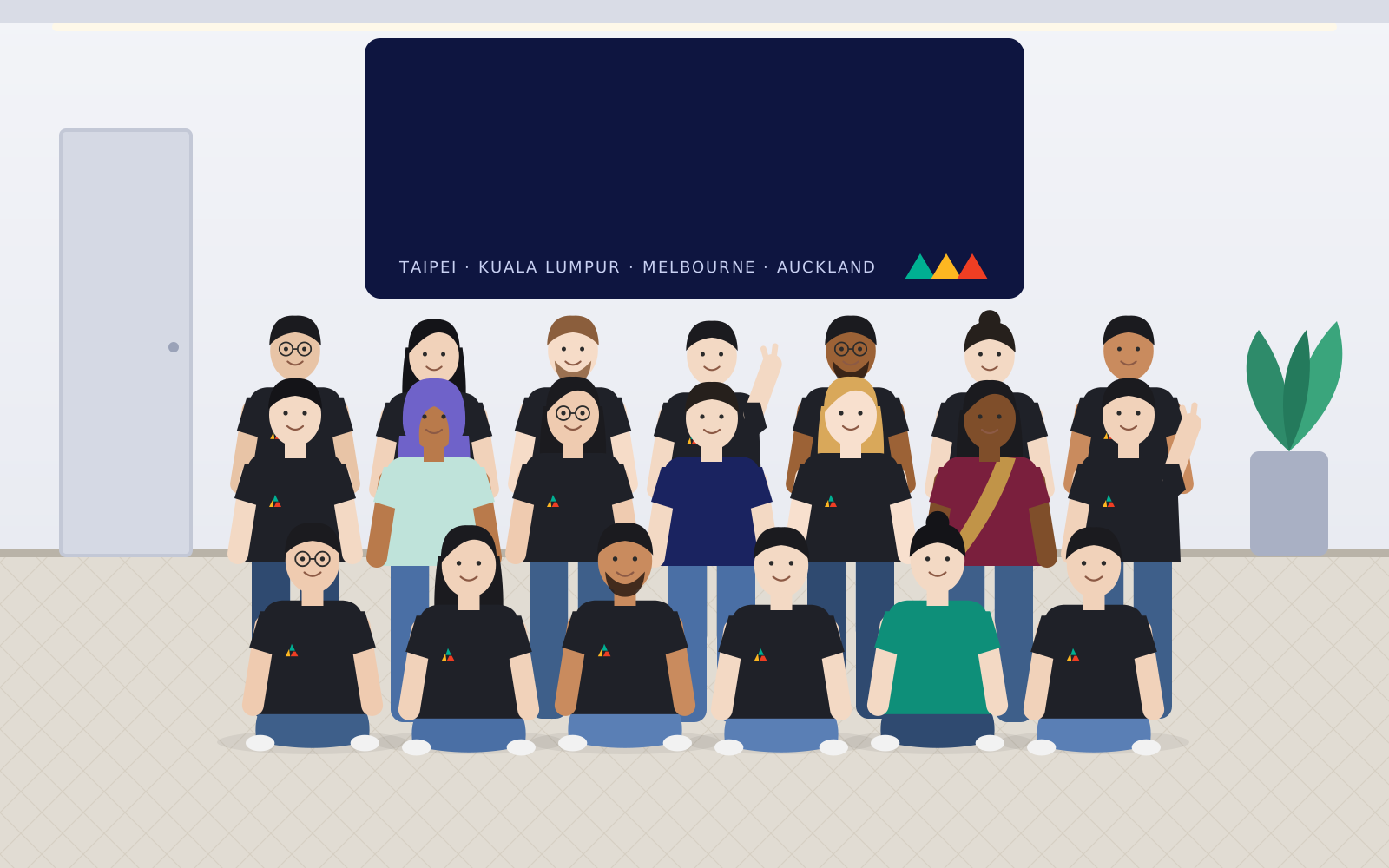
A forward deployed engineer works inside your team for the length of the deployment, with our solution engineers, integration developers and delivery manager behind them. Context is learned where it lives.
Keep responsibility at decision points
Suggestions are separate from approved actions. Consequential outputs pass through permissions and review steps, and users can inspect the sources, correct errors and escalate exceptions.
Evaluate on real cases
Usefulness and failure modes are measured in your actual context, with a test set drawn from your own cases and re-run whenever a model, source or rule changes.
Respect data boundaries
Each engagement defines what information is used, who may access it and how it is retained. There is no shared client-data pool across clients or across Magellan Global brands.
Hand over, don’t hold on
Documentation, training and operating routines are part of every deployment. Our aim is a workflow your own people can run and extend.
Forward deployed engineering
How forward deployment works
A forward deployed engineer (FDE) is an AwePlus engineer assigned to one client for the length of a deployment. They work inside your team rather than from our office, because the details that decide whether an AI workflow is trusted live in your systems, your documents and your meetings.
Week one
Access agreed with your IT and compliance owners. The FDE joins the process owner’s team, sits in the daily work and starts the workflow map.
During Design and Deploy
The FDE configures AKE, writes the first integrations with Taipei engineering behind them, and runs every evaluation with your reviewers in the room.
At handover
The FDE has trained the people who will run the workflow, documented the change process, and leaves a team that does not depend on them.
Why it matters for B2B AI DX
Enterprise AI fails on context, not capability. An engineer who has seen your real cases, your exceptions and your approval culture builds a workflow that survives contact with Monday morning.
Diagnose. Design. Deploy. Operate.
Each stage ends with a decision: continue, adjust or stop. Durations are indicative for a bounded first workflow and are agreed before each stage starts.
Diagnose
We interview process owners, map the current workflow with its hand-offs and exceptions, and review the data, systems and permissions involved. Candidate use cases are ranked on value, feasibility, operational risk and readiness. The stage ends with a recommended pilot, acceptance criteria and a named owner.
- Current-state process map and baseline measures
- Prioritised use-case shortlist
- Implementation brief
Design
We produce the knowledge-source and permission map, specify agent tasks and approval points, and draw the integration boundaries with your systems. The evaluation set is built from your real cases, including the difficult ones, so that “working” has a definition before anything is built.
- Knowledge-source and permission map
- Workflow and approval specification
- Architecture and evaluation set
Deploy
AKE is configured in your environment. Integrations and interfaces are built in reviewable increments with change control. Each release is tested against the evaluation set and reviewed with the process owner before users are trained and the workflow goes live on the agreed scope.
- Configured environment and versioned releases
- Evaluation results and acceptance records
- User guidance and training
Operate
A named service owner, monitoring, support hours and escalation paths are agreed. When a model, a knowledge source or a business rule changes, the change owner re-runs the checks before the updated workflow is used. Improvements are managed through a backlog we review with you.
- Support and operating plan
- Change records
- Improvement backlog
What we ask of you
A process owner
One accountable person who can describe the work, decide what good looks like and sign off on changes.
Representative examples
Real, non-sensitive cases, including awkward and incomplete ones, for the evaluation set.
A systems list
The applications, repositories and identity provider involved, and who administers them.
A review rhythm
Short, regular reviews at each decision point. Most engagements need an hour a week from the owner.
How we measure
We agree task-specific criteria before building and report against them at every decision point. Typical measures:
- Accuracy and completeness against the evaluation set
- Rework and exception rates compared with the baseline
- Time from case opened to decision made
- Reviewer effort per approval point
- Adoption: who uses the workflow, how often, and what they bypass
Working across four countries
Engineering is centred in Taipei, with delivery and client services in Kuala Lumpur, Melbourne and Auckland. A deployment is led by the office closest to you, uses the same method everywhere, and draws engineering from Taipei as needed. Workflows are built in the languages your teams use.
Start with one workflow.
Tell us the process, the people who run it and what you would like to change. We will suggest the right first conversation, with no obligation.